
HMO Cleaning: Everyone Uses the Kitchen, but Nobody Cleans It

It’s a familiar problem for landlords managing shared rental properties.
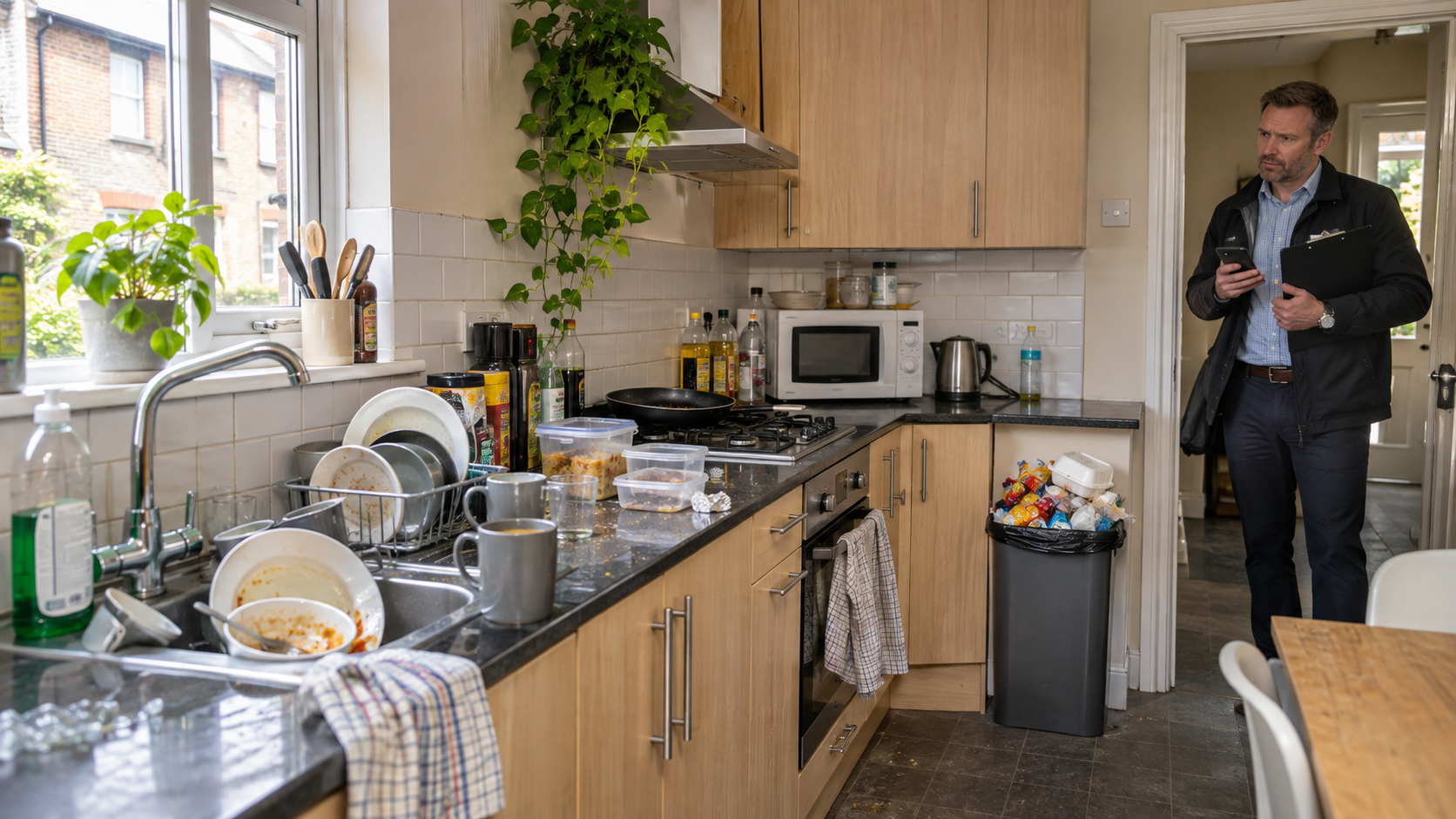
Five tenants share one kitchen. Everyone uses the hob, microwave, worktops and fridge. But when it comes to cleaning, nobody seems to take responsibility.
Dirty plates pile up in the sink. Food is left on the worktops. The bins overflow, and the bathroom becomes a regular source of complaints.
Before long, the landlord starts receiving messages from frustrated tenants blaming one another.
HMO cleaning can be one of the most challenging parts of managing a shared rental property, particularly when several people have different routines, standards and expectations.
And the problem goes beyond arguments about dirty dishes. Poor communal hygiene can lead to unpleasant living conditions, pest problems, maintenance concerns and additional responsibilities for the property manager.
So, who is actually responsible for cleaning shared areas in a House in Multiple Occupation (HMO), and what can landlords do when tenants cannot agree on keeping the property clean?
Five Tenants, One Kitchen and Nobody Wants to Clean
Imagine you own a five-bedroom HMO in Wembley, North West London.
The property is rented to five working professionals, each occupying a separate bedroom.
Some tenants leave for work at 7 am. Others work evening shifts or spend several days working from home.
They share a kitchen, two bathrooms, a living area and a small garden.
When everyone first moved in, things seemed straightforward.
The tenants agreed to keep the shared spaces reasonably clean, and you assumed they would sort out a cleaning rota between themselves.
But three months later, you receive a WhatsApp message.
“Hi, the kitchen is absolutely filthy again. I’m always the one cleaning it, and nobody else seems bothered.”
The following day, another tenant complains:
“Someone keeps leaving food in the sink. It smells, and the bins are overflowing.”
By Friday, a third tenant sends photographs of a dirty shower and asks when someone is going to clean it.
You contact the tenants and remind them about their responsibilities.
Everyone agrees that the property should be cleaner.
But nobody accepts responsibility for the mess.
The following week, the same complaints begin again.
Now you’re spending your evenings trying to resolve arguments about dirty dishes, rubbish bins and bathroom cleaning.
This is a hypothetical scenario, but it illustrates a common management challenge in shared accommodation.
The problem isn’t always that tenants refuse to clean. Often, it’s that nobody knows exactly who is responsible for what.
Why HMO Cleaning Is More Complicated Than Cleaning an Ordinary Rental Property
A typical rental property may be occupied by one person, a couple or a family who organise their cleaning arrangements together.
An HMO can be different.
Several unrelated people may share essential facilities while maintaining completely separate schedules and lifestyles.
One tenant might clean the kitchen immediately after cooking.
Another may leave dishes until the following morning.
Someone else might assume the landlord has arranged a cleaner because they’re paying rent for an individual room.
When expectations are unclear, small disagreements can become ongoing problems.
Different Standards of Cleanliness
Not everyone has the same idea of what constitutes a clean kitchen or bathroom.
Some people wipe surfaces after every use. Others consider a weekly tidy sufficient.
Without agreed expectations, tenants can become frustrated by the habits of those they live with.
Shared Responsibility Becomes Nobody’s Responsibility
In a house occupied by five people, it’s easy for everyone to assume somebody else will take the bins out.
The same applies to cleaning the hob, wiping cupboard doors or mopping the kitchen floor.
When nobody takes ownership of these tasks, the condition of communal areas can deteriorate.
High Usage Means More Frequent Cleaning
A kitchen used by five working adults will generally experience more use than one occupied by a single tenant.
Cooking surfaces, sinks, appliances and floors can become dirty more quickly.
Shared bathrooms may also require more frequent attention.
Cleaning Disagreements Affect Tenant Relationships
Repeated arguments over cleaning can make shared accommodation uncomfortable.
Tenants who previously got along may stop communicating, complain to the landlord or become increasingly unhappy with their living arrangements.
For landlords, this can mean more messages, additional property visits and time spent mediating disagreements.
Who Is Responsible for HMO Cleaning in the UK?
This is one of the most important questions for HMO landlords.
In England, responsibility for HMO cleaning depends partly on the property’s layout, tenancy arrangements and applicable management regulations.
Under the Management of Houses in Multiple Occupation (England) Regulations 2006, the person managing an HMO has legal responsibilities for maintaining communal areas.
Regulation 7 requires relevant managers to ensure that common parts are maintained in good repair, remain safe and are reasonably clear of obstructions.
Shared fixtures, fittings and appliances must also be maintained in a safe condition and clean working order, subject to the statutory exceptions.
These requirements can cover areas such as shared kitchens, bathrooms, corridors, staircases and other communal facilities.
The regulations also require suitable arrangements for the storage and disposal of household waste.
Importantly, these duties apply to HMOs covered by the regulations, not only properties requiring a mandatory HMO licence.
Some converted blocks of flats are subject to different statutory arrangements.
Do Tenants Have Cleaning Responsibilities Too?
Yes.
Tenants are still expected to use shared facilities responsibly.
Regulation 10 places duties on HMO occupiers, including taking reasonable care to avoid damage, following waste disposal arrangements and not obstructing the manager in carrying out legal duties.
Tenancy agreements may also contain reasonable cleaning and housekeeping obligations.
However, a landlord or manager cannot simply assume that asking tenants to create a cleaning rota removes the manager’s legal responsibilities.
Where communal cleaning arrangements are failing, the manager may need to take appropriate steps to maintain the required conditions.
The practical distinction is simple: tenants should behave responsibly, but the HMO manager must ensure that applicable communal maintenance duties are met.
Dirty Shared Kitchens: More Than Just an Annoyance
The kitchen is often the busiest room in a shared house.
With several people preparing meals at different times, keeping it clean requires cooperation.
When nobody takes responsibility, problems can build up.
Greasy Hobs and Worktops
Cooking oil, food spills and grease can accumulate on shared cooking surfaces.
If these areas are not cleaned regularly, the kitchen becomes unpleasant to use and more difficult to maintain.
Overflowing Bins
Five tenants can generate a substantial amount of household waste.
If bins are too small, collection arrangements are unclear or rubbish is not disposed of properly, waste can quickly accumulate.
This can create unpleasant smells and attract pests.
Dirty Fridges and Microwaves
Food spills, expired products and poorly stored leftovers can become a source of disagreement.
Without clear rules about food storage and cleaning, tenants may blame one another for the condition of shared appliances.
Blocked Sinks and Drainage Problems
Food waste, grease and other inappropriate materials can contribute to blocked drains.
What begins as a cleaning problem may eventually require a plumbing professional.
Routine cleaning and sensible waste disposal habits can help reduce some of these avoidable issues.
However, persistent drainage problems should be investigated rather than treated as a housekeeping matter alone.
Shared Bathrooms Can Become Another Source of Conflict
Bathrooms are another common source of complaints in HMOs.
When several people share showers, toilets and sinks, cleaning needs can increase.
Common problems include:
- Limescale around taps and shower screens.
- Soap residue and dirty tiles.
- Hair collecting in shower drains.
- Dirty mirrors and washbasins.
- Overflowing bathroom bins.
- Wet floors and inadequate ventilation.
A bathroom that is not properly maintained can also develop more serious problems.
For example, persistent condensation and inadequate ventilation may contribute to damp and mould.
Mould should not automatically be blamed on tenants failing to clean.
Leaks, poor ventilation, insulation problems and defects in the building may all contribute.
Where these issues arise, the landlord or managing agent should investigate the underlying cause and arrange appropriate remedial work.
Cleaning helps maintain a bathroom, but it cannot fix structural or maintenance problems.
What Happens When HMO Communal Areas Are Not Properly Maintained?
Ignoring persistent communal cleaning problems can have consequences beyond tenant complaints.
Poorly maintained shared areas can create hygiene problems, cause damage and increase the time required for future cleaning.
They can also raise concerns about compliance with HMO management regulations.
For example, a manager who fails to maintain relevant communal areas, keep them in safe working condition or provide suitable waste disposal arrangements may be in breach of statutory duties.
Local councils have powers to investigate and enforce HMO management requirements.
The consequences depend on the nature of the breach and the applicable legislation.
For landlords, the sensible approach is to address problems early, maintain records and make sure appropriate cleaning and maintenance arrangements are in place.
It is generally easier to deal with a dirty kitchen before it becomes a recurring dispute involving several tenants.
How to Stop Tenants Arguing About Cleaning
You cannot force five unrelated adults to have identical cleaning habits.
But you can create clear expectations and practical arrangements that reduce confusion.
1. Explain Cleaning Responsibilities From the Beginning
When tenants move in, make sure they understand how shared areas should be used and maintained.
Explain expectations for washing dishes, wiping cooking surfaces, storing food and disposing of rubbish.
These arrangements should be reasonable, clearly communicated and consistent with tenancy terms and applicable management obligations.
2. Provide Suitable Cleaning Equipment
Tenants are more likely to maintain shared areas when basic cleaning equipment is available.
Depending on the property, this could include a vacuum cleaner, mop, bucket, suitable bins and cleaning tools.
Any shared equipment should be appropriate for the property and kept in safe condition.
3. Agree on a Practical Cleaning Schedule
A simple rota may help tenants share everyday cleaning responsibilities.
For example, one tenant might take responsibility for putting out the rubbish in a particular week, while another handles agreed routine kitchen tasks.
However, a rota should not be treated as a substitute for the manager’s legal obligations.
If the arrangement repeatedly fails, the manager may need to organise additional cleaning.
4. Carry Out Appropriate Property Checks
Periodic checks can help identify cleaning and maintenance issues before they become serious.
Any visits must respect tenants’ rights, privacy and the applicable rules governing access.
Photographs, maintenance records and reports can help landlords track recurring problems without becoming involved in personal disputes between individual occupants.
5. Consider Scheduled Professional HMO Cleaning
For properties with several occupants, arranging regular cleaning of communal areas may be a more reliable solution than relying entirely on an informal rota.
A professional cleaner can complete agreed cleaning tasks at scheduled intervals.
This creates a consistent cleaning arrangement without making individual tenants responsible for organising the whole process.
Why Regular HMO Cleaning Can Be Worth Considering
Professional cleaning is not necessarily required every day, and the appropriate frequency will depend on the property’s occupancy, layout, condition and use.
However, scheduling regular communal cleaning may offer several practical benefits.
A More Consistent Standard
Instead of relying on tenants with different routines, landlords can establish agreed cleaning tasks and frequencies.
This may help keep shared kitchens, bathrooms and corridors in a more consistent condition.
Fewer Arguments About Routine Cleaning
When a cleaner is responsible for scheduled communal cleaning, there may be fewer disagreements about who should mop the kitchen floor or clean the shared bathroom.
Tenants still need to clean up after themselves and use facilities responsibly.
Earlier Identification of Problems
Regular cleaning visits may help bring obvious problems to attention, such as leaking taps, persistent odours or damaged fittings.
Cleaning professionals are not substitutes for qualified property inspectors or maintenance contractors, but they can report visible issues when agreed as part of the service.
Less Day-to-Day Work for Landlords
For landlords who work full-time or manage several properties, arranging one regular cleaning service can be more manageable than repeatedly responding to complaints and organising separate cleaning visits.
How LandlordFix Can Help With HMO Cleaning and Property Maintenance
At LandlordFix, we understand that managing a shared rental property can involve more than collecting rent and dealing with occasional repairs.
When several people use the same facilities, communal areas can require regular attention.
Our platform connects landlords and property owners with cleaning and maintenance professionals, helping make property care easier to organise.
Cleaning for Shared Kitchens and Bathrooms
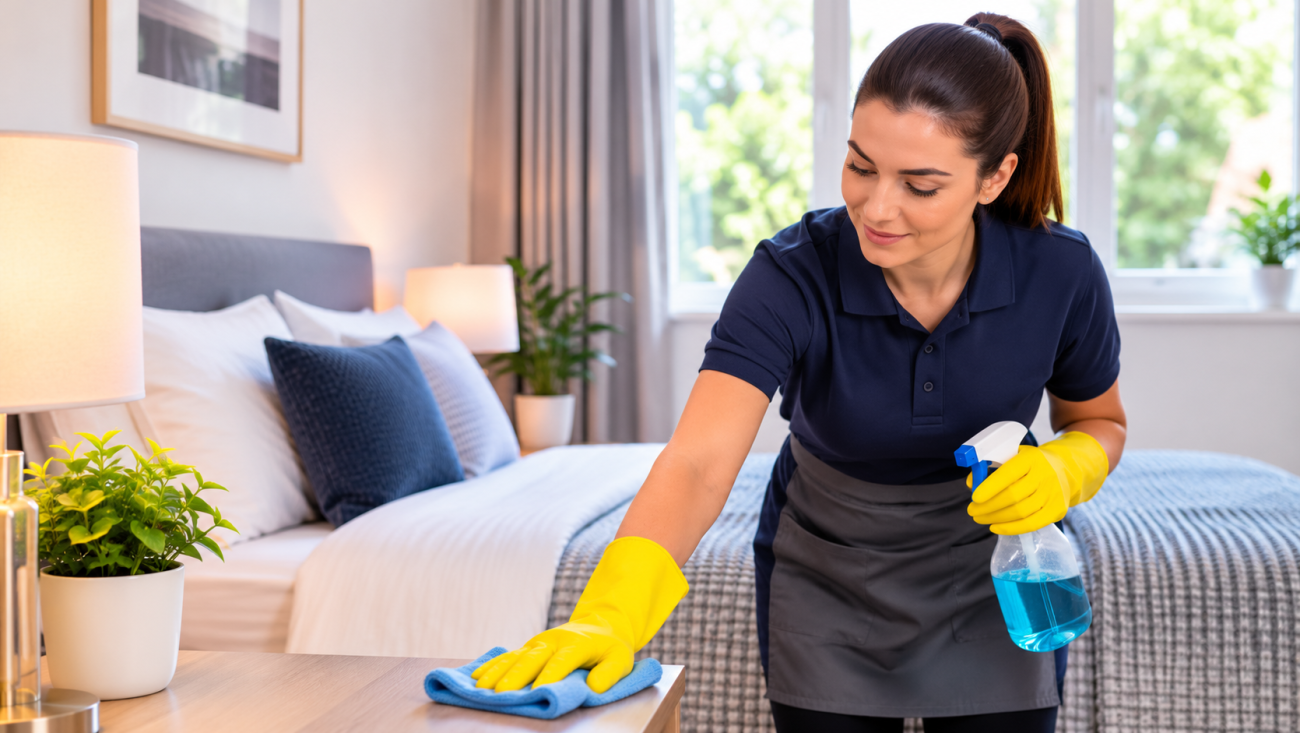
LandlordFix advertises cleaning services that include kitchen and bathroom sanitation, surface cleaning, floor vacuuming, mopping and general tidying.
For HMO landlords, these services may be suitable for maintaining agreed communal areas, depending on the property’s requirements and local availability.
Deep Cleaning When Extra Attention Is Needed
Sometimes a routine clean is not enough.
Grease can accumulate around cooking areas, limescale can build up in bathrooms, and hidden corners can become neglected.
LandlordFix also advertises deep cleaning services covering areas such as kitchen and bathroom descaling, appliance interiors and more detailed cleaning tasks.
These may be useful when shared spaces require more intensive attention.
Recurring Cleaning Arrangements
LandlordFix’s platform advertises support for recurring cleaning orders, including the option of using the same cleaner for repeat bookings.
This could be useful for landlords seeking a regular schedule for shared areas, subject to cleaner availability and the agreed service.
Property Maintenance Support
Cleaning is only one part of managing an HMO.
If a kitchen sink becomes blocked, a fitting is damaged or another maintenance issue arises, LandlordFix also advertises access to property maintenance professionals.
The platform is designed to help property owners submit requests and monitor job progress.
Actual service coverage, contractor qualifications, pricing and recurring booking arrangements should be confirmed before booking.
The aim is to make it easier for landlords to organise cleaning and property care without having to manage every task personally.
A Practical HMO Communal Cleaning Schedule
The following example can help landlords think about how frequently different areas may need attention.
It is an illustrative housekeeping schedule, not a universal legal requirement.
| Area | Suggested frequency | Tasks |
| Shared kitchen | Daily tenant housekeeping; professional cleaning weekly or as needed | Wipe surfaces, clean hob, mop floor, remove grease |
| Shared bathrooms | Several times weekly or as needed | Clean toilets, sinks, showers, mirrors and floors |
| Hallways and stairs | Weekly or as needed | Vacuum, mop and clean accessible surfaces |
| Shared bins | According to use and collection arrangements | Empty bins, clean receptacles and manage waste |
| Appliances | Regular checks; deeper cleaning as needed | Clean microwave, fridge interiors and appliance surfaces |
| Communal deep cleaning | Periodically, depending on condition | Descaling, detailed kitchen and bathroom cleaning |
The most suitable schedule depends on how many people live in the property, the condition of the facilities and any specific licensing or management requirements.
Landlords should review the arrangements if cleaning complaints continue or the property requires more frequent attention.
Frequently Asked Questions About HMO Cleaning
Who is responsible for HMO cleaning in the UK?
In England, the person managing an HMO has legal responsibilities for maintaining relevant communal areas and shared facilities under the HMO management regulations. Occupiers also have duties concerning reasonable use, damage and rubbish disposal. The exact arrangements depend on the property and applicable tenancy and licensing conditions.
Does an HMO landlord have to provide a cleaner?
There is no universal rule requiring every HMO to have a professional cleaner attending at a fixed frequency. However, the manager must meet the applicable requirements for maintaining shared areas. Depending on the property and circumstances, arranging a professional cleaner may be a practical way to achieve this.
Can HMO tenants be responsible for cleaning shared kitchens?
Tenants can have reasonable housekeeping responsibilities under their tenancy arrangements. However, the HMO manager cannot simply transfer away statutory management duties. If agreed cleaning arrangements fail, the manager may need to take further action.
How often should HMO communal areas be cleaned?
There is no single schedule suitable for every HMO. Cleaning frequency should reflect occupancy, use, property condition and applicable licence requirements. Busy shared kitchens and bathrooms may require more attention than less frequently used areas.
Can a landlord charge tenants extra for HMO cleaning?
This depends on the tenancy agreement, the nature of the charge and applicable tenancy-fee legislation. Landlords should not assume they can impose additional cleaning fees during a tenancy. For assured tenancies in England, prohibited payment rules may apply. Seek appropriate advice before introducing separate charges.
How can I arrange regular HMO cleaning?
You can contact a cleaning provider directly or use a platform such as LandlordFix to explore available cleaning professionals. Confirm the communal areas, tasks, frequency, access arrangements, price and availability before agreeing a booking.
A Cleaner HMO Can Mean Fewer Problems for Everyone
Managing a shared rental property will always require coordination.
Different tenants have different schedules, habits and expectations.
You cannot prevent every disagreement about dirty dishes or overflowing bins.
But you can establish clear responsibilities, provide suitable facilities and arrange professional support when needed.
A sensible cleaning routine helps maintain shared spaces and can reduce the number of complaints landlords need to handle.
It also allows tenants to enjoy a more comfortable shared living environment.
When everyone uses the kitchen, someone still needs to make sure it is properly maintained.
Tired of HMO Cleaning Complaints? Let LandlordFix Help
If you’re regularly dealing with complaints about dirty kitchens, shared bathrooms or neglected communal areas, it may be time to introduce a more organised cleaning arrangement.
At LandlordFix, we help landlords and property owners connect with cleaning and maintenance professionals for their rental properties.
Whether you need routine communal cleaning, a more thorough deep clean or help arranging property maintenance, explore the services available through our platform.
Spend less time chasing cleaning complaints and more time managing your property with confidence.
Find a Cleaning Professional Through LandlordFix
Or explore our property cleaning and maintenance services.
Email: support@landlordfix.com
Telephone: +44 33 0818 2808