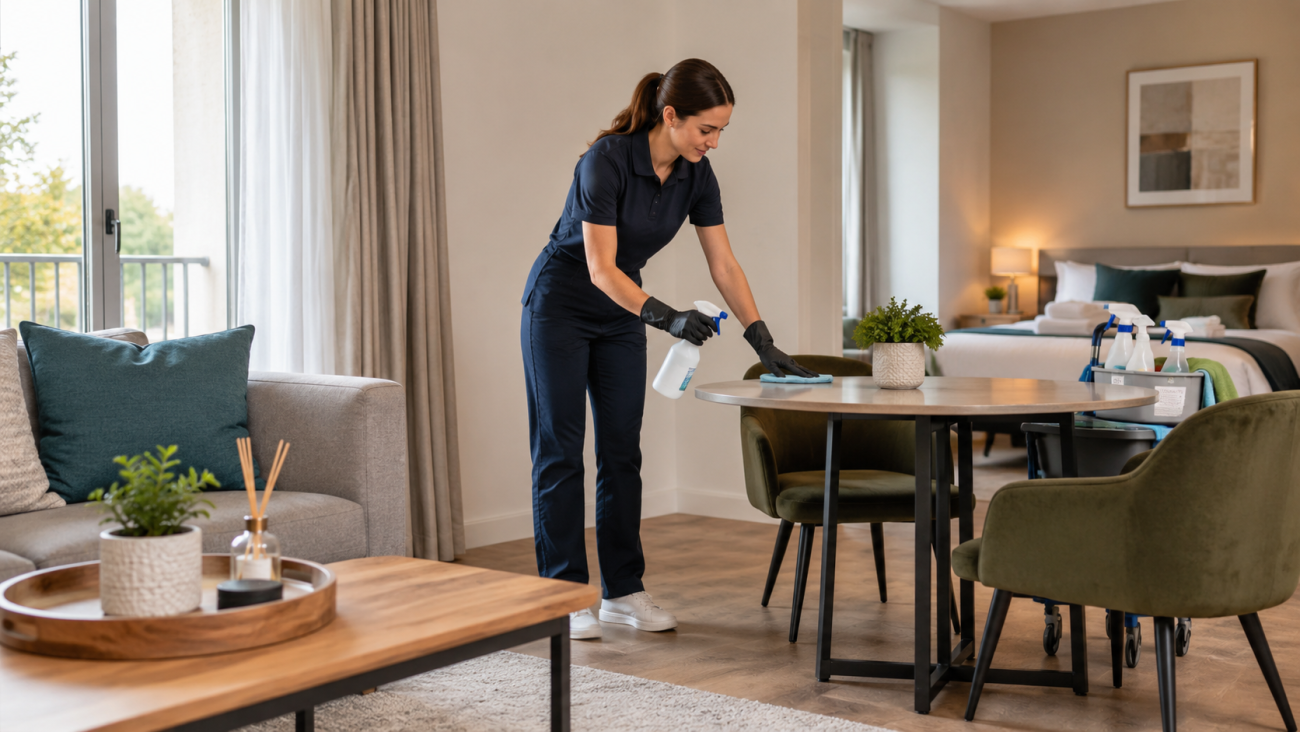

End of Tenancy Cleaning: Who Pays When Tenants Leave a Property Dirty?


The tenants have moved out, the keys have been returned, and you’re finally ready to prepare your rental property for its next occupants.
But when you open the front door, you’re met with a completely different situation.
The kitchen is greasy, the oven hasn’t been cleaned, the bathroom is covered in limescale, and there are stains on the carpets.
To make matters worse, your new tenants are moving in within a few days.
Now you’re facing an unexpected cleaning bill, a tight deadline and a potentially difficult conversation about the tenancy deposit.
End of tenancy cleaning is one of the most common causes of disagreement between landlords and tenants in England. But who is actually responsible for paying when a property is left dirty?
And how can landlords get their properties ready for the next tenancy without spending days organising cleaners and dealing with disputes?
The Tenant Has Left, but the Property Is Far From Ready
Imagine you own a two-bedroom rental flat in Harrow, West London.
Your tenants have lived there for three years. They’ve generally paid their rent on time and haven’t caused any major problems.
Their tenancy has now ended, and you’ve already arranged for new tenants to move in on Monday.
It’s Thursday afternoon when you visit the property to collect the keys and complete the final inspection.
At first glance, everything seems fine.
But then you walk into the kitchen.
There’s grease around the extractor fan, food residue inside the oven and sticky marks on the cupboards.
In the bathroom, the shower screen is covered in limescale, the grout is discoloured, and the floor hasn’t been properly cleaned.
The carpets also need attention, and there’s a lingering smell from the kitchen.
You contact the outgoing tenants.
They insist they’ve cleaned the property and don’t believe they should pay anything extra.
Now you’re left with two problems.
You need to establish whether any cleaning costs can fairly be deducted from their deposit, and you need to arrange for the property to be cleaned before Monday.
All while juggling work, family commitments and other responsibilities.
This is an illustrative scenario, but it’s the kind of situation many landlords will recognise.
The real frustration isn’t simply finding a dirty property. It’s dealing with the extra time, money and uncertainty when you expected the tenancy handover to be straightforward.
Why End of Tenancy Cleaning Causes So Many Disputes
Cleaning standards are often subjective.
One person might consider a bathroom perfectly acceptable, while another notices limescale around the taps, dirty grout and residue on the shower screen.
A tenant may believe they’ve cleaned the property thoroughly because they’ve vacuumed the carpets, wiped the worktops and emptied the cupboards.
The landlord, however, might expect the oven, extractor fan, skirting boards and other areas to be returned to the standard recorded at the start of the tenancy.
This difference in expectations can quickly create disagreement.
According to research published by The Deposit Protection Service (DPS) on 11 June 2026, cleaning accounted for 29.38% of deposit deduction claims in 2025.
It was the leading reason for such claims for the fifth consecutive year.
However, fewer than 5% of deposits protected by the DPS end in a formal dispute.
This highlights an important point: while most tenancies do not result in formal disputes, cleaning remains a significant cause of disagreement when landlords seek deposit deductions.
The best way to manage these situations is to understand the rules, maintain clear evidence and communicate expectations before a tenancy ends.
Who Is Responsible for End of Tenancy Cleaning in the UK?
For rental properties in England, tenants are generally expected to return the property to the same standard of cleanliness as when their tenancy began.
This does not mean every property must be professionally cleaned.
It means the property should be returned in a comparable condition, allowing for the condition recorded at check-in.
For example, if a landlord provided a property with a professionally cleaned oven and spotless bathroom, the tenant would generally be expected to return those areas to a comparable level of cleanliness.
But if the property wasn’t particularly clean when the tenant moved in, the landlord cannot automatically expect it to be returned in a better condition at the tenant’s expense.
This is why a detailed check-in inventory is so important.
Can a Landlord Force a Tenant to Pay for Professional Cleaning?
Under the Tenant Fees Act 2019, landlords in England cannot generally require tenants to purchase a professional cleaning service simply because their tenancy is ending.
However, that does not remove the tenant’s responsibility to return the property to the appropriate cleanliness standard.
If additional cleaning is reasonably necessary because the property was left dirtier than when the tenancy began, the landlord may be able to claim appropriate costs from the tenancy deposit.
The key distinction is between requiring a tenant to buy a cleaning service and seeking compensation for a proven cleaning issue.
Landlords cannot automatically deduct an arbitrary cleaning fee.
Any proposed deduction must be reasonable and supported by evidence.
What Is Fair Wear and Tear, and What Counts as Poor Cleaning?
One of the biggest sources of confusion during tenancy handovers is the difference between normal wear and tear and avoidable cleaning problems.
Fair wear and tear refers to the natural deterioration that occurs through ordinary use of a property over time.
For example:
- Slightly faded carpets after several years.
- Minor scuff marks on walls.
- Natural wear on frequently used flooring.
- Gradual deterioration of fixtures through reasonable use.
Landlords generally cannot charge tenants for fair wear and tear.
Cleaning, however, is assessed against the property’s cleanliness at the start of the tenancy.
For example, a heavily greased oven that was clean at check-in may justify a cleaning deduction.
Similarly, significant limescale or accumulated dirt that was not present at the beginning may require additional cleaning.
The important question is not whether the landlord would personally prefer the property to look newer.
It’s whether the cleanliness has deteriorated compared with the recorded starting standard.
A landlord should not use a tenant’s deposit to fund improvements or upgrades that go beyond putting matters right.
The Hidden Financial Cost of a Dirty Rental Property
A dirty property can create financial pressures beyond the cleaning bill.
Imagine your new tenants are due to move in on Monday.
You discover the property requires more work than expected.
You now need to find a suitable cleaner, explain what needs doing, arrange access and check the work before the next tenancy begins.
If additional problems are discovered, such as a broken appliance or damaged flooring, you may also need to arrange repairs.
The cost isn’t necessarily limited to the cleaner’s invoice.
You might need to take time off work, rearrange appointments or spend your weekend supervising contractors.
If the property cannot be made ready for the agreed move-in date, further complications and costs may arise, depending on the circumstances and contractual obligations.
And if the outgoing tenant disputes a proposed deposit deduction, you may need to spend additional time gathering evidence and responding through the deposit protection scheme.
For landlords with multiple properties, these problems can become particularly time-consuming.
Preparing a property between tenancies is not just about cleanliness. It’s about managing time, protecting the property’s condition and ensuring the next handover runs smoothly.
How to Handle End of Tenancy Cleaning Disputes Fairly
If your tenants have left a property dirty, it’s important to deal with the situation professionally rather than making deductions immediately.
1. Review the Original Inventory
Start by checking the inventory and check-in report completed when the tenancy began.
Look for specific notes about the condition and cleanliness of the kitchen, bathroom, carpets, appliances and other areas.
A detailed inventory helps establish the standard against which the property’s final condition should be assessed.
2. Complete a Proper Check-Out Inspection
Inspect the property and record its condition after the tenants have vacated.
Where possible, compare the check-out report directly with the check-in inventory.
Take clear photographs of specific cleaning issues, such as a dirty oven or stained carpet.
Photographs can help, but a detailed written check-in and check-out record is generally more persuasive than photographs alone.
3. Identify Genuine Cleaning Issues
Separate cleaning problems from damage and normal wear.
Avoid assuming that every mark, stain or worn surface is the outgoing tenant’s responsibility.
For example, a faded carpet may reflect normal use, while substantial food residue or a clearly unclean appliance may require additional cleaning.
4. Obtain a Reasonable Cleaning Quote
If professional cleaning is needed, request a suitable quote based on the property’s actual condition.
Avoid automatically commissioning a complete deep clean and expecting the former tenant to pay the entire bill if only certain areas were left below the original standard.
The proposed deduction should reflect the reasonable cost of addressing the additional cleaning required.
5. Communicate With the Former Tenant
Explain the issues clearly and provide supporting evidence.
If the tenant agrees, the relevant amount can be deducted through the applicable deposit arrangements.
If there is disagreement, the tenancy deposit protection scheme’s dispute resolution process may help determine a fair outcome.
Keep communications factual and professional.
Why Professional End of Tenancy Cleaning Can Make Life Easier
Whether the outgoing tenant pays for additional cleaning or the landlord arranges it as part of preparing the property, professional cleaning can be a practical solution.
This is particularly true when a property has been occupied for several years or needs to be prepared quickly for new tenants.
Thorough Kitchen Cleaning
Kitchens often need attention beyond everyday wiping and sweeping.
Grease can build up around extractor fans, inside ovens and on cupboard surfaces.
A deep cleaning service can address these areas and help restore a more presentable standard.
Bathroom Descaling and Cleaning
Limescale, soap residue and dirt can accumulate around showers, taps, tiles and bathroom fittings.
Professional deep cleaning can help tackle these problems, particularly when normal cleaning has not been sufficient.
Floors, Skirting Boards and Hidden Areas
Areas behind furniture, along skirting boards and around fixtures are easily overlooked.
A more detailed clean can help bring the property back to a suitable standard before its next occupants arrive.
Less Work for Landlords
For many landlords, the biggest benefit is convenience.
Instead of spending their own weekend scrubbing bathrooms or cleaning the oven, they can arrange for a cleaning professional to complete the agreed work.
This allows landlords to focus on inspections, tenancy administration and other property responsibilities.
Professional cleaning does not guarantee that a tenancy deposit dispute will be avoided or resolved in the landlord’s favour. It is a practical way of addressing cleaning needs, not a substitute for evidence or fair deposit procedures.
How LandlordFix Helps With End of Tenancy Cleaning
At LandlordFix, we understand that preparing a rental property between tenants can be stressful.
You’re dealing with moving dates, property inspections, keys, paperwork and sometimes unexpected repairs.
The last thing you want is to spend several days trying to find someone who can properly clean the property.
That’s why LandlordFix helps connect landlords and property owners with cleaning and property maintenance professionals.
Our platform is designed to make it easier to find and arrange cleaning services that suit rental properties.
Deep Cleaning for Rental Properties
LandlordFix advertises deep cleaning services suitable for properties that need more attention than a routine clean.
Depending on the agreed service scope, cleaning can include:
- Kitchen and bathroom descaling.
- Cleaning inside appliances and cabinets.
- Attention to skirting boards and hidden corners.
- General sanitisation.
- Odour removal and property refreshing.
This is particularly relevant when tenants have moved out and the property needs preparing before a new tenancy.
Cleaning for Property Handover
LandlordFix’s cleaning services are designed around the practical needs of rental properties, including move-in and move-out preparation.
Whether you’ve discovered that a property needs extra cleaning after a tenancy or you’re organising the next handover in advance, the platform provides a way to request suitable cleaning support.
Service availability, pricing and exact cleaning tasks should be confirmed when booking.
A Simpler Way to Arrange Property Cleaning
For landlords who work full-time, live away from their rental property or manage several homes, arranging cleaning can become another administrative burden.
LandlordFix offers an online route to finding cleaning and property maintenance professionals without having to manage the entire search yourself.
The aim is simple: make it easier to organise the practical work required to keep rental properties clean and ready for use.
How Landlords Can Prevent Cleaning Problems Before the Next Tenancy
Although cleaning problems cannot always be avoided, a few sensible steps can make future handovers more straightforward.
Create a detailed check-in inventory. Record the cleanliness of each room, including appliances, cupboards and bathroom fittings.
Set clear expectations early. Explain that tenants are expected to return the property to the same cleanliness standard as when they moved in.
Communicate before move-out. Provide reasonable guidance about areas commonly overlooked, such as ovens, extractor fans and bathrooms.
Arrange a thorough check-out inspection. Compare the property’s final condition with the original inventory before agreeing deposit deductions.
Allow time for cleaning between tenancies. Where possible, avoid relying on an unrealistically short turnaround, particularly if you have not yet inspected the property.
Keep cleaning records. Retain relevant invoices, reports and other evidence that may help establish the work carried out.
These steps can help landlords avoid unnecessary misunderstandings while making property handovers more organised.
Frequently Asked Questions About End of Tenancy Cleaning
Who pays for end of tenancy cleaning in the UK?
In England, tenants are generally responsible for returning the property to the same cleanliness standard as at the beginning of the tenancy. If additional cleaning is reasonably required because the property was left dirtier, a landlord may be able to claim appropriate costs from the tenancy deposit. Landlords cannot automatically charge tenants for an entire professional clean.
Can landlords deduct cleaning costs from a deposit?
Yes, where there is a valid basis for a reasonable deduction. Landlords should provide evidence showing that the property’s cleanliness deteriorated during the tenancy. If the parties disagree, the relevant deposit protection scheme may resolve the dispute.
Does a tenant have to hire a professional cleaner before moving out?
No. Tenants in England cannot generally be required to purchase professional cleaning simply because their tenancy is ending. They can clean the property themselves, provided it is returned to the appropriate standard.
What if a tenant leaves the oven dirty?
If the oven was clean at the start of the tenancy and is significantly dirtier at check-out, a landlord may be able to claim the reasonable cost of restoring its original level of cleanliness. The inventory and check-out evidence are important.
Is fair wear and tear the same as poor cleaning?
No. Fair wear and tear concerns natural deterioration through normal use. Cleaning claims concern differences in cleanliness between the start and end of the tenancy. These issues should be assessed separately.
How can I arrange end of tenancy cleaning for my rental property?
You can arrange a professional cleaning service directly or use a booking platform such as LandlordFix to find suitable cleaning professionals. Confirm the required tasks, property size, access arrangements, availability and quote before booking.
End of Tenancy Cleaning Shouldn’t Become Another Landlord Headache
Most landlords want the same thing when tenants move out.
A straightforward handover, a property returned in an appropriate condition and enough time to prepare for the next occupants.
But sometimes things don’t go according to plan.
Kitchens are left dirty, bathrooms need attention, and disagreements about deposits create unnecessary stress.
Understanding the cleaning rules, keeping accurate inventories and dealing with problems fairly can help landlords manage these situations.
And when a professional clean is needed, finding suitable support can take some of the pressure out of preparing your property.
Your time is valuable. Preparing your rental property shouldn’t have to consume all of it.
Need End of Tenancy Cleaning? Find Help With LandlordFix
Whether your tenants have just moved out or you’re preparing a property for its next occupants, LandlordFix can help you find cleaning professionals for your rental property.
From deep cleaning kitchens and bathrooms to general move-in and move-out preparation, explore cleaning services designed around the needs of landlords and property managers.
Don’t spend your weekend dealing with a dirty rental property. Explore professional cleaning with LandlordFix.
Find a Cleaning Professional Through LandlordFix
Or visit our cleaning and property maintenance services to learn more.
Email: support@landlordfix.com
Telephone: +44 33 0818 2808