
The Complete Rental Property Maintenance Checklist for Landlords: What to Check and When

Owning a rental property is not simply a matter of finding a tenant and collecting the rent. From the roof and plumbing to electrics, heating, ventilation and everyday wear and tear, every property requires ongoing attention if it is going to remain safe, comfortable and attractive to tenants.
The difficulty for many landlords is knowing what needs checking and when.
Some maintenance tasks should form part of a regular routine, while others only need professional inspection at defined intervals. Certain problems can safely be scheduled for routine attention, whereas issues such as dangerous electrics, major leaks or loss of essential services may require much faster action.
A good rental property maintenance strategy therefore should not begin when something breaks. It should begin with a structured schedule that helps you identify deterioration early, maintain the condition of your investment and organise repairs before relatively minor defects develop into expensive problems.
This complete landlord maintenance checklist explains what to look for throughout the year, what should be checked between tenancies and how LandlordFix can help landlords organise cleaning, repairs and maintenance without having to coordinate every job themselves.
Why Preventive Property Maintenance Matters
There are broadly two ways to maintain a rental property: reactively and proactively.
Reactive maintenance means waiting until something fails before doing anything about it. The tenant reports a leaking pipe, faulty socket, blocked drain or broken appliance, and only then does the repair process begin.
Preventive maintenance takes a different approach. It involves checking the property periodically, looking for signs of deterioration and dealing with emerging problems before they become more serious.
Consider a small leak beneath a sink. If it is noticed early, the solution may be relatively straightforward. If it remains unnoticed for months, the same leak could damage a kitchen unit, flooring or surrounding materials and potentially contribute to damp or mould.
The same principle applies throughout a rental property. A loose roof tile, deteriorating seal around a bath, blocked gutter or intermittent electrical fault may initially seem minor, but delaying maintenance can substantially increase the scale of the eventual repair.
Preventive maintenance cannot eliminate unexpected problems, but it can reduce the number of surprises.
Landlord Maintenance Responsibilities: What Should You Be Looking After?
For rental properties in England, landlords are generally responsible for keeping the structure and exterior in repair, along with installations for water, sanitation, heating, hot water, gas and electricity. Landlords also have wider responsibilities relating to the safety and condition of the property.
Tenants, meanwhile, normally have responsibilities for taking reasonable care of the home and for damage caused by themselves, their household or guests.
The exact responsibilities can depend on the property, tenancy and circumstances, so landlords should understand the requirements applying to their individual rental.
From a practical maintenance perspective, however, there is an important principle to remember:
If a problem concerns the safety, structure or essential systems of your rental property, do not assume it can simply wait until the next tenancy.
A structured maintenance routine helps ensure these issues are identified and dealt with appropriately.
The Rental Property Maintenance Checklist
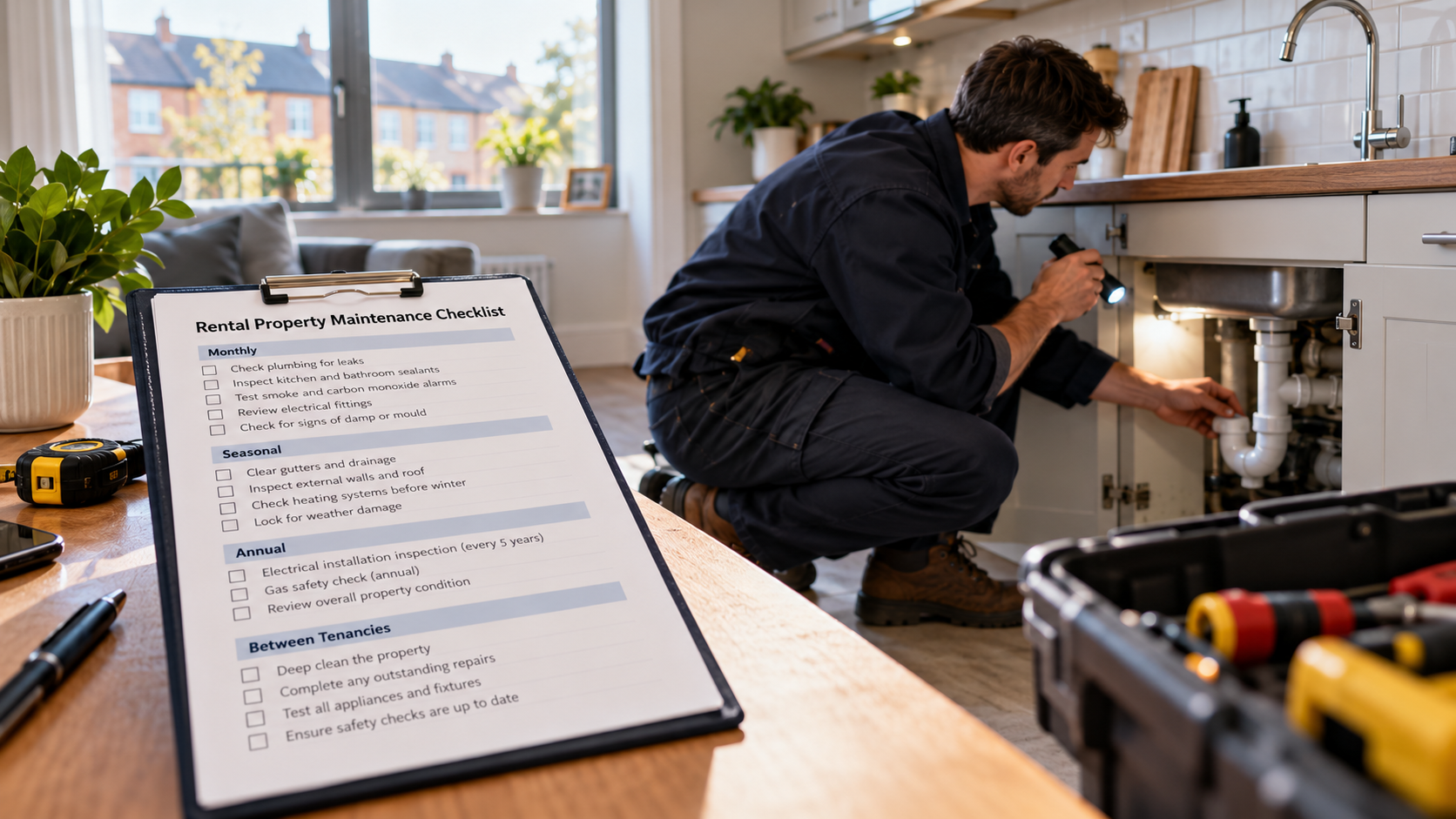
Rather than attempting to remember dozens of individual jobs, landlords can divide property maintenance into ongoing, monthly, seasonal, periodic and between-tenancy checks.
Here is what to consider.
Ongoing: Respond to Tenant-Reported Maintenance Problems
Your tenant is often your first line of defence against property deterioration because they live in the property every day.
Encourage tenants to report problems early rather than waiting until they become serious.
Common reports might include dripping taps, slow drains, intermittent electrical problems, unusual boiler noises, signs of damp, leaks, damaged fixtures or appliances that are no longer working correctly.
When something is reported, assess its urgency rather than simply adding it to a general maintenance list.
A leaking pipe and a loose cupboard handle are both maintenance issues, but they clearly do not carry the same level of risk.
LandlordFix can help landlords organise maintenance requests and connect with vetted professionals for the work required, making it easier to move from “the tenant has reported a problem” to “the repair is being handled.”
Monthly: Review Outstanding Maintenance
You may not need to physically inspect a tenanted property every month, but it is sensible to review your maintenance records regularly.
Check whether any previously reported jobs remain unresolved, whether contractors have completed scheduled work and whether there are recurring problems that may indicate a larger underlying issue.
For landlords with several properties, this becomes particularly important. A minor outstanding repair can easily disappear among emails, messages and invoices when there are multiple tenants and contractors involved.
A simple monthly review can prevent jobs from being forgotten.
Check Plumbing for Early Signs of Leaks
Water damage can become expensive quickly, so plumbing deserves particular attention.
Look for or ask tenants to report dripping taps, leaking toilets, moisture around pipework, slow-running drains, water beneath sinks, changes in water pressure and unusual marks on walls or ceilings.
Do not focus only on obvious leaks. A small amount of persistent moisture can cause damage long before water starts appearing across a floor.
Bathrooms and kitchens deserve particular attention because of the amount of water used in these areas.
Inspect Bathrooms and Sealants
Bathrooms combine water, heat and humidity, making them one of the most maintenance-intensive parts of a rental property.
Check sealant around baths, showers and basins for deterioration or gaps. Inspect grout, shower screens, taps, toilets and extractor fans.
Poor ventilation can contribute to condensation and mould, while failed sealant can allow water to reach areas where it should not.
Replacing deteriorated sealant at the right time is considerably easier than repairing damaged flooring or walls later.
Check for Damp, Condensation and Mould
Damp and mould should never simply be treated as a cosmetic problem.
Look for dark patches, peeling paint, staining, persistent condensation, musty smells and areas where walls feel damp.
The important step is to investigate why the problem is occurring.
Possible causes include leaks, inadequate ventilation, failed seals, defective guttering, problems with the building fabric or condensation.
Cleaning visible mould without dealing with the underlying cause may only result in it returning.
Where damp or mould is reported, investigate promptly and arrange appropriate maintenance rather than assuming that repainting will solve the problem.
Check Heating and Hot Water
A heating problem discovered during cold weather can quickly become urgent, so landlords should pay attention to heating systems before they are needed most.
Ask tenants to report unusual noises, pressure loss, radiators that are not heating properly, inconsistent hot water or other changes in system performance.
If the property contains gas appliances, landlords have specific gas-safety obligations. In England, relevant gas appliances and flues require an annual safety check by a Gas Safe registered engineer.
The annual gas safety check should not be confused with general maintenance. A safety inspection does not mean you should ignore signs that a heating system is developing a fault between checks.
Check Electrical Fixtures and Warning Signs
Electrical problems should be taken seriously.
Landlords should pay attention to reports of damaged sockets, flickering lights, switches that become unusually warm, repeated tripping, burning smells or visible damage to electrical fittings.
Do not attempt electrical repairs unless you are appropriately competent and qualified to do so.
For private rented properties in England, electrical installations must generally be inspected and tested by a qualified person at intervals of no more than five years, or sooner where the previous report specifies a shorter interval.
LandlordFix provides access to professional electrical services, helping landlords arrange appropriate assistance when electrical maintenance or repair work is required.
Test Smoke and Carbon Monoxide Alarms
Fire and carbon monoxide safety should form part of the property’s maintenance routine.
In England, relevant landlords must provide smoke alarms on each storey used as living accommodation and carbon monoxide alarms in rooms used as living accommodation containing a fixed combustion appliance, excluding gas cookers.
Required alarms must be working at the start of a new tenancy, and landlords have responsibilities for repairing or replacing faulty prescribed alarms once notified and the fault is established.
Even outside formal tenancy-start checks, alarms should never become something everyone assumes is working without verification.
Check Windows and Doors
Windows and external doors affect security, ventilation, weatherproofing and energy efficiency.
Look for damaged handles, locks that do not operate properly, cracked glass, deteriorating frames, draughts and failed seals.
Windows should also open and close correctly where they are designed to do so.
A relatively small adjustment to a window or door can sometimes prevent a larger problem involving moisture ingress, heat loss or security.
Inspect the Property Exterior
The exterior of the property protects everything inside it, yet it is easy to overlook because tenants spend most of their time indoors.
Periodically inspect visible roofing, brickwork, render, external pipework, gutters, downpipes, fences, gates and external steps.
Look for missing or damaged roof tiles, cracks, loose materials, overflowing gutters, blocked downpipes or signs of water staining.
You do not need to climb onto a roof yourself. Where inspection at height or specialist work is required, use an appropriately competent professional.
Keep Gutters and Drainage Clear
Guttering has a simple job: move rainwater safely away from the building.
When gutters become blocked with leaves, moss or debris, water can overflow onto walls and potentially contribute to damp and deterioration.
Autumn is an obvious time to pay particular attention, but properties surrounded by trees may require more frequent checks.
Also look at external drains and gullies for obvious blockages or standing water.
Check Kitchens and Landlord-Supplied Appliances
The kitchen is another high-use area where small maintenance issues can quickly become inconvenient for tenants.
Inspect taps, sinks, drainage, cupboard hinges, worktops and sealant. Where appliances are supplied as part of the tenancy, pay attention to their condition and any reported faults.
A refrigerator door that no longer seals correctly, an oven that heats inconsistently or a washing machine beginning to leak should not be ignored simply because the appliance still technically operates.
Early attention may prevent a larger failure and inconvenience later.
Seasonal Property Maintenance Checklist
The UK climate makes seasonal maintenance particularly useful. Different parts of a property are placed under greater stress at different times of year.
Spring: Assess Winter Damage
Spring is a good opportunity to look at how the property has come through winter.
Check visible roof areas, gutters, external walls, fencing and drainage for storm or weather damage. Look for signs of moisture that may have developed during colder months and inspect external areas that may have been neglected during winter.
This is also a useful time to arrange cleaning or minor repairs before problems develop further.
Summer: Exterior and Preventive Maintenance
Longer days and generally better weather make summer useful for exterior maintenance.
Consider external painting, fence repairs, garden maintenance and other work that is more difficult during wet or cold weather.
It can also be an appropriate time to look ahead to the heating season rather than waiting until the first cold week of winter to discover a problem.
Autumn: Prepare for Wet and Cold Weather
Autumn is one of the most important periods for preventive landlord maintenance.
Clear gutters and check downpipes. Look for visible roof problems, inspect seals around windows and doors and make sure heating-related maintenance has been considered before temperatures fall.
Falling leaves and heavier rainfall can quickly expose weaknesses in drainage systems.
A relatively small amount of autumn maintenance can prevent much more disruptive winter repairs.
Winter: Monitor Heating, Water and Weather-Related Problems
During winter, heating and plumbing become particularly important.
Respond quickly to heating failures, leaks and concerns about frozen pipework. After severe storms, check whether the building has suffered visible external damage.
Landlords should also pay attention to tenant reports concerning persistent condensation or mould during colder months and investigate potential causes rather than assuming the problem will disappear when the weather improves.
Annual Rental Property Maintenance Checklist
At least once a year, it is useful to step back from individual repairs and consider the overall condition of the property.
Your annual review might include:
- Heating and hot-water performance
- Gas safety where applicable
- Plumbing and visible pipework
- Electrical warning signs and certification dates
- Smoke and carbon monoxide alarms
- Windows, doors and locks
- Roof, gutters and downpipes
- Damp, mould and ventilation
- Bathrooms and sealants
- Kitchen fixtures and supplied appliances
- External walls and drainage
- Gardens, fences and external access
- Outstanding maintenance from previous inspections
- General decorative condition
This review can also help you start budgeting for larger future expenditure.
A boiler may still be operating but approaching the stage where replacement should be considered. Flooring may be serviceable now but unlikely to survive another tenancy. External decoration may not be urgent today but could require attention next year.
Good maintenance planning includes preparing for these costs rather than being surprised by them.
Between Tenancies: Your Essential Property Turnaround Checklist
The period between tenants provides one of the best opportunities to inspect a rental property thoroughly.
With the property empty, you can access areas that may have been difficult to inspect while occupied and carry out work without inconveniencing a tenant.
Before the next tenant moves in, consider the following.
Complete a Thorough Property Inspection
Walk through every room systematically rather than relying on a quick visual check.
Look at walls, ceilings, flooring, doors, windows, sockets, lighting, plumbing, heating, kitchen fittings, bathrooms and supplied appliances.
Compare the property’s condition with previous records where appropriate and identify maintenance that needs completing before re-letting.
Complete Outstanding Repairs
Avoid beginning a new tenancy with a list of known problems.
A loose handle, dripping tap or damaged cupboard may seem minor, but presenting a property with unfinished repairs immediately creates the impression that maintenance is not a priority.
Use the vacant period to resolve outstanding issues wherever practical.
Deep Clean the Property
A professionally cleaned property creates a much stronger first impression for the next tenant.
Pay attention to kitchens, bathrooms, floors, internal glass, cupboards and areas that are easily missed during everyday cleaning.
LandlordFix offers property cleaning and deep-cleaning services suitable for rental-property turnarounds, helping landlords prepare homes for their next occupants.
Check Safety Requirements and Certification
Review relevant safety documentation and make sure required checks remain current.
For England, this may include gas safety, electrical safety, alarms and other requirements applicable to the particular property.
If anything is due to expire shortly, the vacant period may be a convenient opportunity to organise it.
Test the Property as a Tenant Would Experience It
Do not simply look at the property.
Use it.
Run taps. Flush toilets. Open and close windows. Test doors and locks. Check lighting. Look at extractor fans. Make sure heating and hot water are operating appropriately.
This practical approach can reveal problems that a purely visual inspection misses.
10 Rental Property Maintenance Problems Landlords Should Never Ignore
Some defects deserve faster attention because delay can increase safety risks or property damage.
1. Active Water Leaks
Even a relatively small leak can cause significant damage if allowed to continue. Investigate the source and arrange repair promptly.
2. Electrical Burning Smells, Sparking or Repeated Tripping
Potential electrical faults require appropriate professional attention. Do not repeatedly reset a circuit without investigating why it is tripping.
3. Loss of Heating or Hot Water
Particularly during cold weather, loss of essential heating or hot water should be treated seriously and addressed promptly.
4. Persistent Damp or Mould
Investigate the underlying cause rather than simply cleaning the visible surface.
5. Roof Leaks
Water entering through a roof can damage ceilings, insulation, electrics and internal finishes. The longer it continues, the more extensive the repair can become.
6. Blocked or Overflowing Drains
Drainage problems can escalate rapidly and may create hygiene concerns or water damage.
7. Faulty Smoke or Carbon Monoxide Alarms
Safety alarms should never be placed on a general “when we have time” maintenance list.
8. Broken External Locks or Security Problems
A rental home needs to remain secure. Damaged locks, external doors or windows should be assessed quickly.
9. Structural Cracking or Movement
Not every crack indicates a serious structural issue, but significant, widening or unexplained cracking deserves appropriate investigation.
10. Recurring Repairs
If the same tap, drain, appliance, electrical circuit or area of damp keeps causing problems, stop treating each incident as an isolated repair.
A recurring problem may be telling you that the underlying cause has not been resolved.
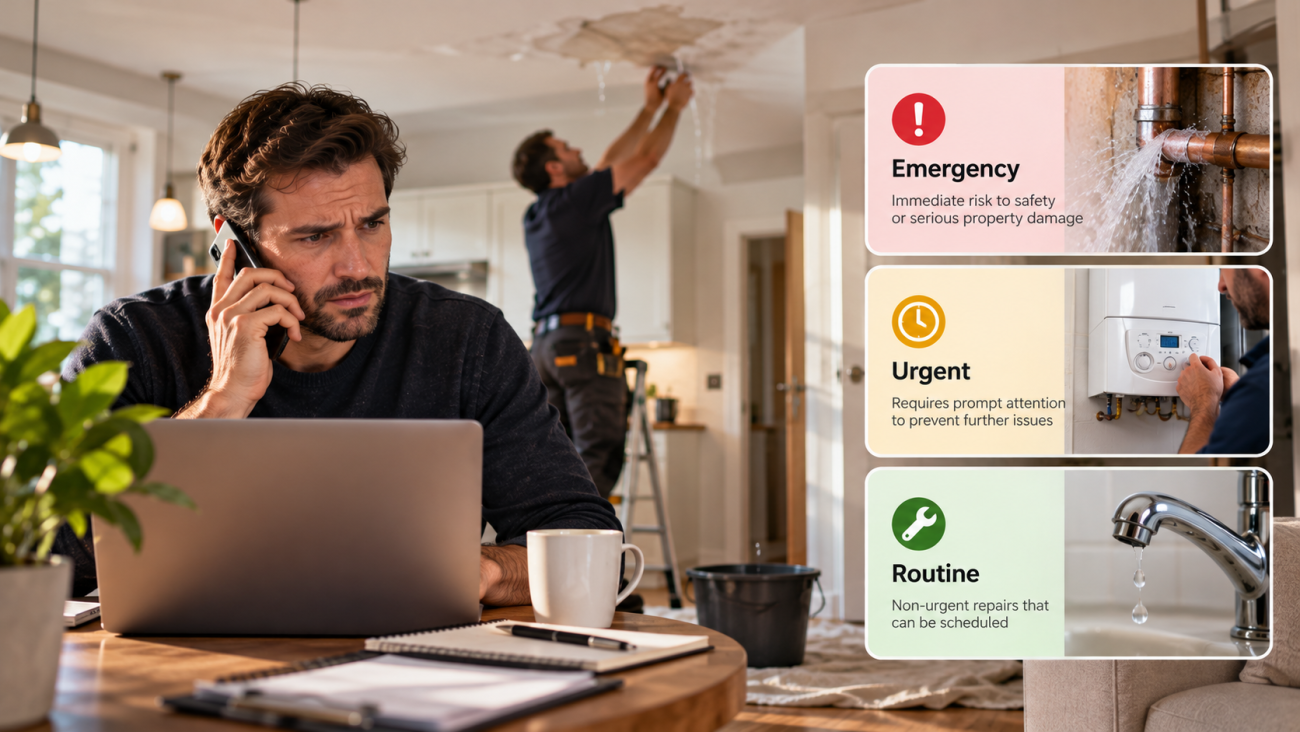
Emergency, Urgent or Routine: How Should Landlords Prioritise Repairs?
Not every maintenance request requires the same response.
An emergency may involve an immediate risk to people or serious risk of property damage, such as a significant uncontrolled water leak, serious electrical hazard or another dangerous condition.
An urgent repair may not present the same immediate danger but could substantially affect the tenant’s ability to use the home or could worsen if delayed.
A routine repair is something that needs fixing but can reasonably be scheduled without creating an immediate safety issue or serious damage.
The important point is to have a process for deciding which category a problem belongs to and then acting accordingly.
When landlords manage maintenance through scattered emails, text messages and telephone calls, it becomes easier for jobs to be delayed or overlooked.
A structured maintenance system provides much greater visibility.
How LandlordFix Makes Rental Property Maintenance Easier
For many landlords, the difficult part of property maintenance is not recognising that something needs repairing. It is organising everything that happens next.
You need to understand the problem, find the right professional, arrange the job, coordinate access, monitor progress and make sure the work has actually been completed.
Multiply that process across several properties and maintenance can become a significant administrative burden.
LandlordFix is designed to make property maintenance simpler for landlords.
Through LandlordFix, landlords can access vetted professionals for property cleaning, deep cleaning, electrical work, plumbing and general property maintenance. Maintenance requests can be submitted and progress tracked, giving landlords a clearer way to manage work without relying on a collection of unrelated messages, contractors and notes.
This can be particularly useful for landlords who live away from their rental property, manage several properties, have demanding careers or simply do not want every repair to become another project to coordinate personally.
A Well-Maintained Property Is an Investment Strategy
Maintenance is often treated purely as an expense.
That overlooks what good maintenance is actually protecting.
Your rental property is an asset. The roof, heating system, electrics, plumbing, kitchen, bathroom, flooring and external structure all contribute to its condition and ability to provide a good home.
Allowing small defects to deteriorate can increase repair costs, disrupt tenants and gradually reduce the quality of the property.
Regular maintenance does the opposite. It gives landlords greater visibility over the condition of their investment, creates opportunities to identify problems early and helps keep the property ready for both existing and future tenants.
The objective is not to eliminate every unexpected repair. No maintenance schedule can do that.
The objective is to stop avoidable problems becoming expensive ones.
Need Help Maintaining Your Rental Property?
Whether your property needs a deep clean between tenancies, an electrical repair, plumbing attention or general property maintenance, LandlordFix provides a simpler way to get the work organised.
Submit your maintenance requirement, connect with vetted professionals and keep track of the job as it progresses.
Instead of waiting for a small maintenance problem to become a large repair, take care of your property when it needs attention.
LandlordFix: practical property maintenance support for landlords who want their properties looked after properly.